
Commercializing a clinical diagnostic assay requires sequential execution across four gated milestones: CLSI-compliant analytical validation (LOD, LLOQ, precision, and interference), prospective clinical performance evaluation, regulatory submission under FDA 510(k)/De Novo/PMA or EU IVDR 2017/746 Class C/D, and ISO 13485 design transfer to an IVD contract manufacturer, typically requiring 18–42 months and $1.5M–$12M+.
- Which Regulatory Pathway Fits Your Assay: FDA 510(k), De Novo, PMA, or EU IVDR Class C/D?
- What Analytical Validation Metrics Must Pass Before Clinical Specimen Testing?
- How Do Design Freeze, Verification, and Clinical Evidence Align?
- How Do EU IVDR Performance Evaluation Reports (PER) Differ From FDA Clinical Studies?
- How Do You Execute ISO 13485 Design Transfer and IVD Contract Manufacturing?
- How Do SaMD Cybersecurity and Clinical Bioinformatics Pipelines Impact Clearance?
- Day 3 Biomedical & Clinical Diagnostics Cluster: Deep-Dive Guides
- Frequently Asked Questions
Moving a diagnostic biomarker from academic discovery or prototype assay into reimbursed clinical use is one of the highest-friction commercialization challenges in life sciences. Unlike research-use-only (RUO) reagent kits, clinical in vitro diagnostics (IVDs) and Software as a Medical Device (SaMD) pipelines must satisfy strict statutory standards enforced by the U.S. Food and Drug Administration (FDA), European Notified Bodies under the In Vitro Diagnostic Regulation (EU IVDR 2017/746), and clinical laboratory accreditation bodies. Every software commit, reagent lot, calibrator stability claim, and reference interval must be traceable inside a formal Design History File (DHF) governed by ISO 13485:2016 and 21 CFR Part 820 (harmonized with ISO 13485 under FDA's Quality Management System Regulation).
In 2026–2027, regulatory scrutiny across both sides of the Atlantic has intensified. The FDA's final Laboratory Developed Test (LDT) oversight rule transition and Section 524B medical device cybersecurity mandates now require diagnostics teams—including high-complexity molecular and NGS labs—to treat software architecture, Software Bills of Materials (SBOMs), and cloud bioinformatics pipelines as regulated device subsystems rather than ancillary IT utilities. Meanwhile, EU IVDR transition deadlines for legacy Class D, Class C, and Class B diagnostics have created persistent Notified Body bottlenecks that delay European oncology trials and companion diagnostic launches when Performance Evaluation Reports (PERs) are underpowered (Hersey et al., 2026).
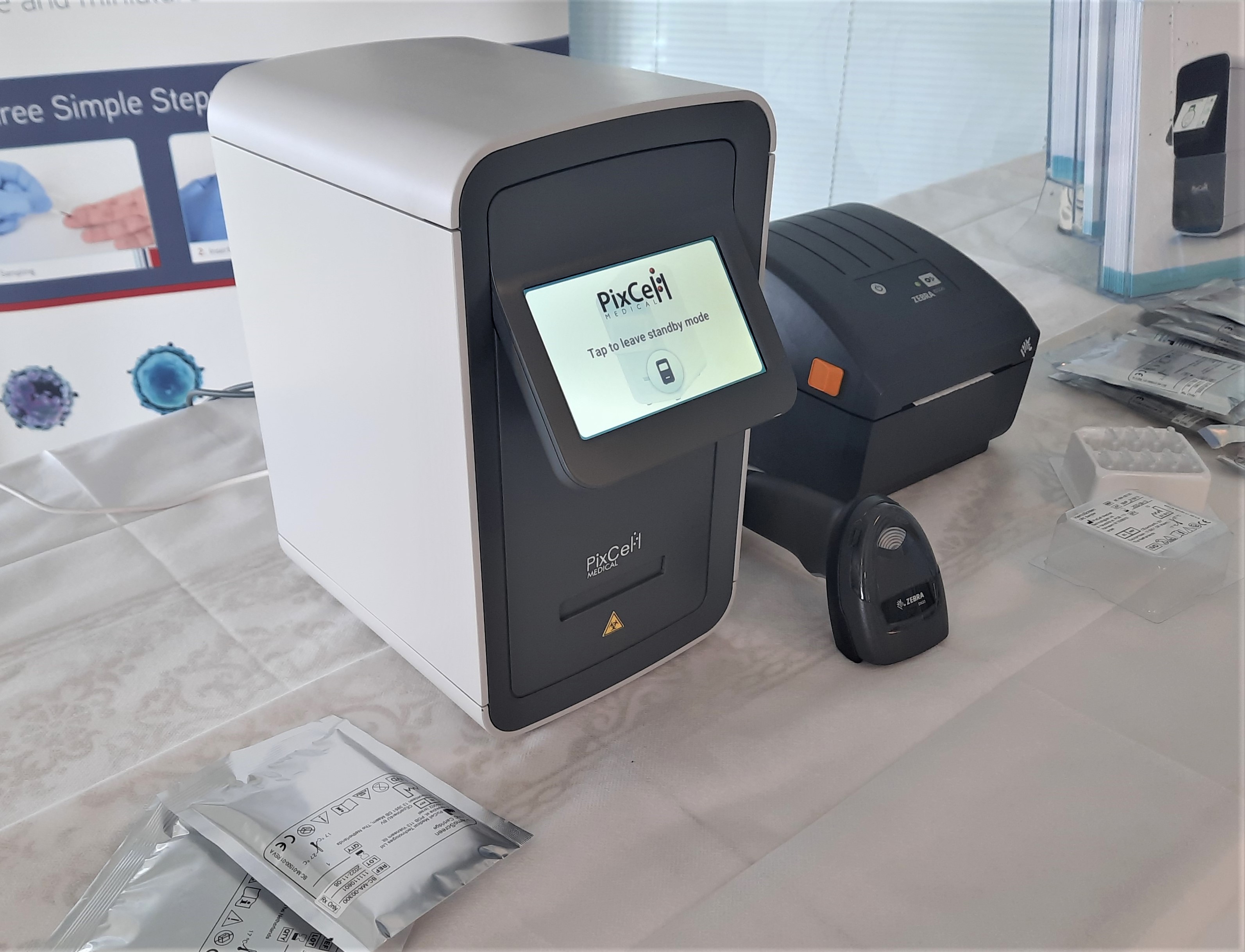
1. Which Regulatory Pathway Fits Your Assay: FDA 510(k), De Novo, PMA, or EU IVDR Class C/D?
Selecting the wrong regulatory classification at the pre-submission stage can invalidate millions of dollars in clinical specimen collection. Diagnostic sponsors must map intended use—specifically the target analyte, clinical claim (screening, diagnosis, prognosis, treatment selection, or minimal residual disease monitoring), specimen matrix, and patient risk profile—directly to FDA and EU IVDR risk tiers before locking analytical protocols.
Under FDA Center for Devices and Radiological Health (CDRH) jurisdiction, moderate-risk assays with a legally marketed predicate device follow the 510(k) substantial equivalence pathway, demonstrating equivalent analytical and clinical performance without proving independent clinical utility from scratch. Novel moderate-risk assays lacking a predicate—such as first-in-class host-response infectious disease signatures or novel algorithmic risk scores—use the De Novo classification route to establish special controls and become the predicate for future competitors. High-risk assays, including Class III oncology companion diagnostics (CDx) guiding targeted therapy selection and blood-screening assays for life-threatening pathogens, require a full Premarket Approval (PMA) supported by prospective pivotal clinical studies and pre-approval manufacturing inspections.
In the European Union, EU IVDR 2017/746 shifted roughly 80% of diagnostics from manufacturer self-declaration under the old IVDD to mandatory Notified Body conformity assessment. Class D devices (high public and individual risk, such as blood donor screening and transmissible life-threatening agents) additionally require EU Reference Laboratory (EURL) batch verification and expert panel scrutiny, while Class C devices (cancer screening, companion diagnostics, genetic testing, and human disease staging) require comprehensive Scientific Validity, Analytical Performance, and Clinical Performance documentation (Charrière et al., 2023).
| Pathway / Risk Tier | Typical Assay Examples | Clinical Evidence Burden | Est. Review & Prep Timeline | All-In Regulatory & Study Budget |
|---|---|---|---|---|
| FDA 510(k) (Class II) | PCR respiratory panels, immunoassay chemistry analyzers with valid predicate | Method comparison vs. predicate (100–300 retrospective/prospective samples) | 12–20 months (90-day FDA clock + holds) | $450K – $1.8M |
| FDA De Novo (Class II) | First-in-class digital pathology AI or novel sepsis host-response panel | Prospective multi-site clinical sensitivity/specificity + special controls | 20–30 months | $1.8M – $5.0M |
| FDA PMA (Class III) | Oncology CDx, ctDNA screening/MRD assays, blood-bank viral screens | Pivotal multi-center prospective trial (1,000–10,000+ subjects) + BIMO/GMP inspection | 30–48+ months | $6.0M – $25M+ |
| EU IVDR Class C | Cancer diagnosis, companion diagnostics, genetic testing, infectious staging | Full PER (Scientific Validity + Analytical + Clinical Performance) + NB QMS audit | 18–30 months (NB queue dependent) | $900K – $4.5M |
| EU IVDR Class D | HIV/HBV/HCV blood screening, high-consequence infectious diagnostics | Class C PER + EURL laboratory testing + Expert Panel consultation + batch release | 24–40 months | $3.5M – $12M+ |
Early regulatory alignment via an FDA Pre-Submission (Q-Submission) is mandatory best practice prior to launching costly validation cohorts. A well-structured Q-Sub locks down FDA consensus on acceptable comparator methods (for instance, composite reference standards when a gold-standard culture lacks sensitivity), minimum positive percent agreement (PPA) and negative percent agreement (NPA) confidence bounds, and whether banked remnant specimens are permissible versus prospective enrollment.
2. What Analytical Validation Metrics Must Pass Before Clinical Specimen Testing?
Analytical validation proves that an assay consistently and accurately measures the intended analyte under real-world laboratory variation before clinical claims are tested. Regulators evaluate analytical files against Clinical and Laboratory Standards Institute (CLSI) consensus guidelines—principally CLSI EP17-A2 (detection capability), CLSI EP05-A3 (precision), CLSI EP06 (linearity), CLSI EP07 (interference), and CLSI EP25 (reagent stability). Executing these studies on locked, production-representative reagents—never early R&D bench prototypes—prevents having to repeat validation after manufacturing scale-up (Haynesworth et al., 2024).
Two parameters routinely trip up molecular and NGS diagnostics sponsors: Limit of Blank (LOB) and Limit of Detection (LOD) versus Lower Limit of Quantification (LLOQ). LOB defines the highest apparent analyte signal expected from true negative replicates (typically 60 blank measurements across multiple reagent lots and days at the 95th percentile). LOD establishes the lowest analyte concentration reliably distinguished from LOB with at least 95% hit rate (verified across 20–60 replicates per concentration using probit regression or non-parametric hit-rate verification). For quantitative oncology assays such as multigene blood-based molecular tests (Kidd et al., 2026) or allele-specific blocker qPCR panels (Hamedi-Asl et al., 2026), LLOQ further requires total allowable error (bias plus imprecision) to remain within predefined clinical tolerances.
| Validation Dimension | CLSI Reference Standard | Typical Study Design | Typical Acceptance Benchmark |
|---|---|---|---|
| LOB & LOD | CLSI EP17-A2 | 60 blank replicates + 5–7 dilution levels across ≥2–3 reagent lots & 5 days | ≤5% false-positive rate in blanks; ≥95% detection at claimed LOD |
| Repeatability & Reproducibility | CLSI EP05-A3 / EP15-A3 | 20 days × 2 runs/day × 2 replicates (single-site) + 3 sites × 5 days (multi-site) | CV ≤5–10% for immunoassays/qPCR; ≥95% categorical agreement near cutoff |
| Linearity & AMI | CLSI EP06 (2nd Ed.) | 7–11 concentration pools spanning below LLOQ to above ULOQ | Deviation from linearity within allowable bias (e.g., ±10–15% or ±0.3 log) |
| Cross-Reactivity & Interference | CLSI EP07 / EP37 | Endogenous interferents (hemoglobin, bilirubin, triglycerides) + drugs + homologous pathogens | <10% bias at high physiological interferent concentrations; 0% false cross-reactivity |
| Specimen & Reagent Stability | CLSI EP25-A | Real-time + accelerated stress across freeze-thaw, onboard, and transport temps | No statistically significant drift (<10% recovery shift) through claimed shelf-life |

3. How Do Design Freeze, Verification, and Clinical Evidence Align?
A frequent cause of FDA Refuse-to-Accept (RTA) holds is submitting clinical performance data collected on an assay version whose cutoff thresholds, bioinformatics variant caller, or extraction kit changed mid-study. Under formal design control, teams must enforce a strict Design Freeze before entering Verification and Validation (V&V). Any post-freeze change to primer concentrations, probe fluorophores, or classification algorithms triggers a documented regression impact assessment and often requires bridging studies.
4. How Do EU IVDR Performance Evaluation Reports (PER) Differ From FDA Clinical Studies?
Many U.S.-headquartered diagnostic startups assume that an FDA 510(k) summary or CLIA Laboratory Developed Test validation packet can be repackaged for European CE-IVD certification. Under EU IVDR 2017/746 Annex XIII, Notified Bodies audit an integrated Performance Evaluation Report (PER) composed of three distinct pillar reports: (1) Scientific Validity Report establishing the biological link between analyte and clinical condition via systematic literature appraisal; (2) Analytical Performance Report covering trueness, precision, analytical sensitivity/specificity, and metrological traceability to ISO 17511 reference materials; and (3) Clinical Performance Report demonstrating diagnostic sensitivity, diagnostic specificity, positive/negative predictive values, and likelihood ratios in the target EU/representative intended-use population (Charrière et al., 2023).
Furthermore, IVDR mandates continuous post-market life-cycle governance via a Post-Market Performance Follow-up (PMPF) plan and annual Periodic Safety Update Reports (PSURs) for Class C and Class D devices. Even in-house hospital laboratory tests (formerly exempt under Article 5.5) face strict justification and quality documentation requirements under ongoing European regulatory amendments (Cobbaert et al., 2026). Organizations operating global diagnostic portfolios synchronize their eQMS document matrices early using the quality controls detailed in our Biotech eQMS Software & Regulatory Consulting Guide.
5. How Do You Execute ISO 13485 Design Transfer and IVD Contract Manufacturing?
Scaling from clinical validation lots to commercial diagnostic kitting requires formal Design Transfer into a Device Master Record (DMR). Unlike therapeutic biopharma CDMOs operating under ICH Q7/Q10 drug GMP (covered in our Biotech Startup Operations & Compliance Stack Pillar), IVD contract manufacturers operate under ISO 13485:2016 and FDA 21 CFR Part 820 Quality System Regulation. Critical design transfer deliverables include incoming raw-material functional QC specifications for enzymes and oligonucleotides, lyophilization or reagent fill-finish process validation (IQ/OQ/PQ), automated barcode and UDI (Unique Device Identification) serialization, and real-time cold-chain shipping validation.
For NGS-based assays and liquid biopsy panels, upstream library preparation kits and flow-cell economics directly determine gross margin at commercial launch. Teams should benchmark reagent cost per sample, read-depth requirements, and platform availability across clinical sequencers using our Next-Generation Sequencing (NGS) Platforms Comparison before signing multi-year OEM supply agreements.
6. How Do SaMD Cybersecurity and Clinical Bioinformatics Pipelines Impact Clearance?
Modern molecular diagnostics—especially cell-free DNA liquid biopsy panels, whole-exome clinical tests, and digital pathology algorithms—rely on cloud-hosted bioinformatics pipelines to call variants, suppress sequencing noise, and compute patient risk scores. Under IEC 62304 (medical device software lifecycle) and FDA Section 524B cybersecurity authority, every pipeline container, Python/R statistical package, reference genome index, and clinical reporting API is subject to pre-market audit. Sponsors must maintain version-locked container digests, automated regression test suites, a machine-readable SPDX or CycloneDX Software Bill of Materials (SBOM), and threat models mitigating unpatched CVEs and unauthorized PHI exposure.
Because diagnostic cloud architectures must simultaneously satisfy clinical software traceability and HIPAA/BAA security, diagnostic engineering leads should align their workflow orchestration and cloud encryption controls with our Enterprise Bioinformatics Pipeline Architecture Pillar (Hub 2).
7. Day 3 Biomedical & Clinical Diagnostics Cluster: Deep-Dive Guides
Explore the three specialized technical spokes below to execute EU IVDR Performance Evaluation Reports, design ultra-sensitive ctDNA liquid biopsy assays, and satisfy FDA Section 524B SaMD cybersecurity mandates:
- Spoke 3A — EU IVDR & ISO 13485: IVDR Compliance Consulting for Diagnostics: Performance Evaluation Reports (PER) and ISO 13485 Roadmap (2026–2027)
- Spoke 3B — Liquid Biopsy & MRD Validation: Liquid Biopsy Assay Development Services: ctDNA vs. CTCs, UMI Error Correction, and MRD Sensitivity (2026–2027)
- Spoke 3C — SaMD Cybersecurity & SBOMs: Medical Device Cybersecurity FDA Guidance: Pre-Market Submissions, SBOM Generation, and Threat Modeling (2026–2027)
- Cross-Cluster Bridge (Bioinformatics Pillar): Enterprise Bioinformatics Pipeline Architecture: In-House Nextflow vs. Cloud Managed Workflows (Hub 2)
- Cross-Cluster Bridge (Biopharma Operations Pillar): Biotech Startup Operations and Compliance Stack: Pre-IND to Phase II Buyer's Guide (Hub 1)
8. Frequently Asked Questions
How long does it take to commercialize an FDA 510(k) vs. PMA clinical diagnostic?
An FDA 510(k) assay with an established predicate typically takes 12–20 months from design freeze through analytical validation, method comparison, and clearance. A Class III PMA companion diagnostic or screening test typically requires 30–48+ months because it requires multi-center prospective clinical trials and facility inspections.
What is the difference between LOD and LLOQ in clinical assay validation?
Under CLSI EP17-A2, the Limit of Detection (LOD) is the lowest concentration reliably detected (≥95% hit rate) above the Limit of Blank (LOB), whereas the Lower Limit of Quantification (LLOQ) is the lowest concentration that additionally meets predefined accuracy and precision (total allowable error) targets for quantitative reporting.
Can remnant biobank samples be used for EU IVDR Performance Evaluation Reports?
Banked remnant specimens with verified clinical truth, informed consent, and documented pre-analytical storage history can support analytical and retrospective clinical performance studies, but EU Notified Bodies increasingly require prospective or multi-site external cohorts for high-impact Class C and Class D claims.
Does FDA Section 524B apply to cloud bioinformatics pipelines used in diagnostics?
Yes. When a diagnostic assay qualifies as a "cyber device" (including SaMD or instrument-coupled software communicating over networks), FDA mandates a Software Bill of Materials (SBOM), threat modeling, vulnerability remediation SLAs, and cybersecurity architecture documentation at pre-market submission.
When should diagnostic sponsors lock assay design before starting clinical validation?
Design Freeze must occur before pivotal analytical V&V and clinical specimen testing. Changing oligo designs, extraction chemistry, cutoff algorithms, or bioinformatics caller versions mid-study invalidates pooled validation datasets and triggers bridging requirements.
What quality management standard governs IVD contract manufacturing?
Diagnostic CDMOs operate under ISO 13485:2016 and FDA 21 CFR Part 820 (harmonized under QMSR), maintaining full Design History Files (DHF), Device Master Records (DMR), lot release CoAs, and UDI traceability.
Verified Scientific & Regulatory References
- Charrière K, et al. Clinical evidence requirements according to the IVDR 2017/746: practical tools and references for underpinning clinical evidence of IVD-MDs. Clin Chem Lab Med. 2023. PMID: 36919280 | DOI: 10.1515/cclm-2022-1252
- Hersey S, et al. Diagnostic regulatory pathways are an underrecognized bottleneck in precision oncology clinical trials: Real-world evidence across Europe. Eur J Cancer. 2026. PMID: 42664749 | DOI: 10.1016/j.ejca.2026.117009
- Haynesworth K, et al. Analytical measuring interval, linearity, and precision of serology assays according to CLSI guidelines. mSphere. 2024. PMID: 39480103 | DOI: 10.1128/msphere.00393-24
- Kidd M, et al. Analytical Validation of NETest2.0, a Novel Multigene Blood-Based Molecular Assay for Neuroendocrine Tumors. Cancers (Basel). 2026. PMID: 42279303 | DOI: 10.3390/cancers18111719
- Hamedi-Asl P, et al. Analytical validation of a modified wild-type blocker qPCR assay for sensitive DNA-based detection in acute myeloid leukemia. Mol Biol Rep. 2026. PMID: 42545548 | DOI: 10.1007/s11033-026-12471-w
- Cobbaert C, et al. EFLM position statement on the proposed 2025/0404(COD) IVDR Amendment of Article 5.5. Clin Chem Lab Med. 2026. PMID: 42089505 | DOI: 10.1515/cclm-2026-0580
Asad Raza (BS Biotechnology, IBMS member, TMPRSS6 thesis researcher) writes evidence-based guides on clinical diagnostics validation, molecular biology instrumentation, bioinformatics pipelines, and life-science regulatory strategy for BMB-UOG.



0 Comments
We will get back to you as soon as possible and thanks for the comment.