
Under FD&C Act Section 524B and FDA's final pre-market cybersecurity guidance, every connected diagnostic analyzer, clinical sequencing instrument, or Software as a Medical Device (SaMD) must submit a machine-readable Software Bill of Materials (SBOM in CycloneDX or SPDX), a Secure Product Development Framework (SPDF) threat model, third-party penetration testing reports, and a post-market vulnerability management plan before FDA 510(k), De Novo, or PMA clearance—otherwise receiving an automatic Refuse to Accept (RTA) hold.
Parent Pillar Context: This regulatory cybersecurity engineering manual completes the software and connected-instrument track of our Clinical Diagnostics Commercialization and Regulatory Guide (Hub 3), showing diagnostic sponsors and SaMD teams how to align FDA Section 524B pre-market deliverables with EU IVDR Annex I cybersecurity requirements.
- Which Diagnostics and SaMD Products Trigger FDA Section 524B Cyber Device Mandates?
- How Do You Build an FDA-Compliant SBOM and STRIDE Threat Model Without Failing RTA?
- What Security Testing, Cryptography, and Post-Market VMP Evidence Does FDA Expect?
- FDA Section 524B vs. EU IVDR MDCG 2019-16 Cross-Jurisdiction Matrix
- Day 3 Clinical Diagnostics & Cross-Cluster Guides
- Frequently Asked Questions
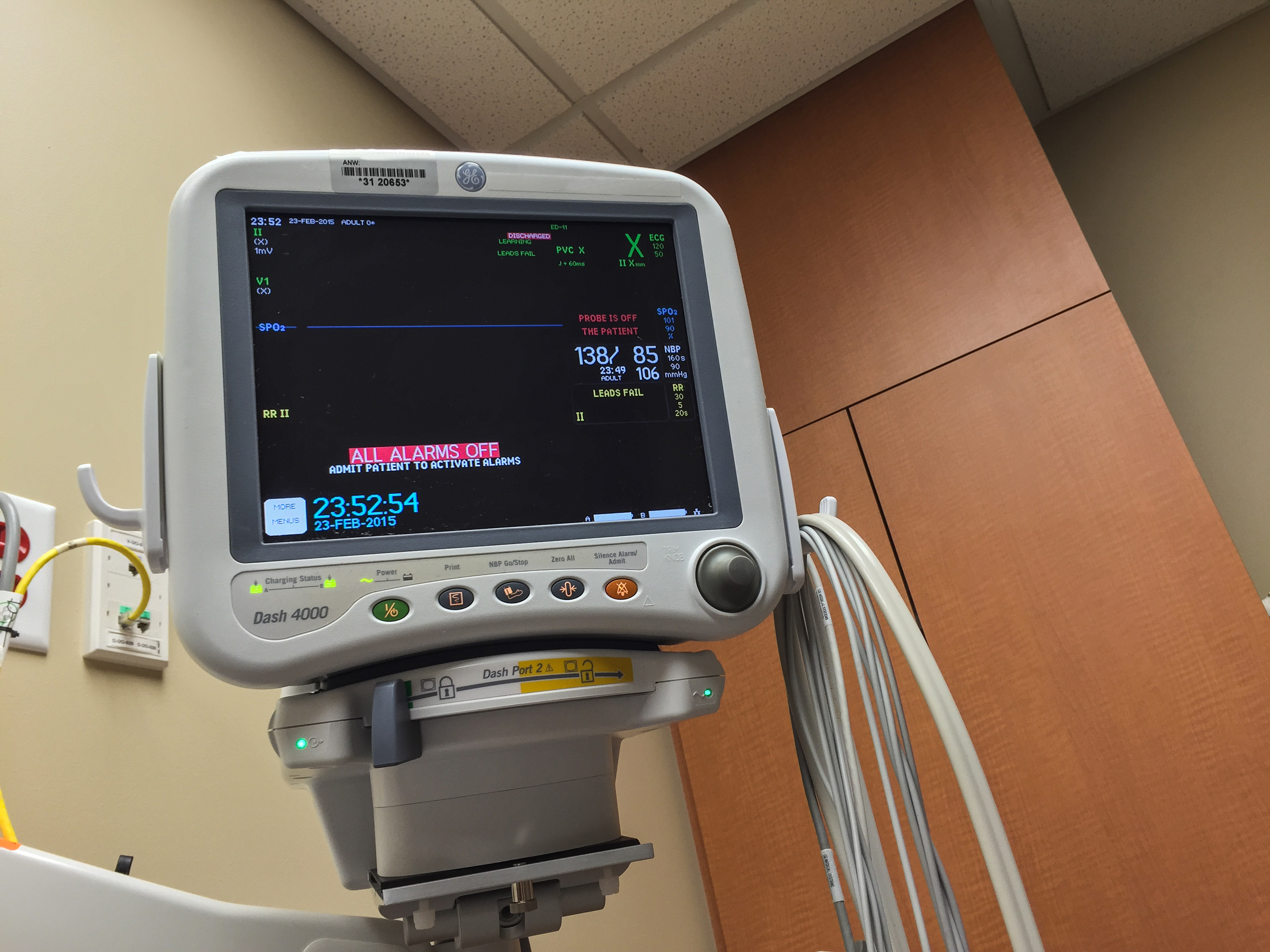
Modern clinical diagnostics rarely operate as isolated hardware. Point-of-care hematology analyzers, PCR thermal cyclers, digital pathology scanners, and cloud-hosted NGS clinical interpretation portals exchange HL7/FHIR orders with hospital Electronic Health Records (EHRs), stream telemetry over TLS, and rely on hundreds of open-source Linux, Python, C++, or container libraries. Because compromised diagnostic software can alter patient assay results or expose protected health information (PHI), U.S. Congress enacted FD&C Act Section 524B via the Consolidated Appropriations Act, transforming cybersecurity from advisory best practice into a statutory condition for FDA pre-market review (Jung et al., 2026).
At the same time, European Notified Bodies auditing Class B, C, and D diagnostics under EU IVDR 2017/746 Annex I General Safety and Performance Requirement (GSPR) 16.4 and MDCG 2019-16 demand parallel information security risk assessments, meaning sponsors who engineer a single Secure Product Development Framework (SPDF) can satisfy both FDA eSTAR and EU technical documentation simultaneously (Charrière et al., 2023; Boubker et al., 2021).
1. Which Diagnostics and SaMD Products Trigger FDA Section 524B Cyber Device Mandates?
Under Section 524B(c), a device qualifies as a statutory cyber device if it satisfies three criteria: (1) it includes software validated, installed, or authorized by the sponsor as a device or in a device; (2) it has the ability to connect to the internet (whether directly via Ethernet/Wi-Fi/cellular or indirectly via a connected workstation, USB bridge, or cloud portal); and (3) it contains any technological characteristics validated, installed, or authorized by the sponsor that could be vulnerable to cybersecurity threats. Importantly, FDA interprets "ability to connect to the internet" broadly—even an instrument designed solely for local hospital LAN/LIS connectivity triggers Section 524B if a service technician or connected PC bridges it to an external network.
This definition encompasses virtually all modern 510(k), De Novo, and PMA diagnostic submissions: cloud-hosted AI diagnostic decision support software, NGS variant-calling SaMD pipelines (HIPAA Bioinformatics Cloud Platform), benchtop PCR/immunoassay analyzers with remote diagnostics, and companion diagnostic companion apps. Legacy predicates cleared prior to 2023 do not exempt a new 510(k) modification from Section 524B; even a Special 510(k) or software-only patch submission must include updated SBOM and cybersecurity risk artifacts when touching connectivity, authentication, or third-party dependencies.
2. How Do You Build an FDA-Compliant SBOM and STRIDE Threat Model Without Failing RTA?
FDA's Refuse to Accept (RTA) screening checklist verifies the presence—and technical completeness—of core cybersecurity artifacts at submission intake, well before substantive scientific review begins. Two deliverables trigger the highest proportion of first-cycle RTA and Additional Information (AI) deficiencies: incomplete Software Bills of Materials (SBOMs) that omit transitive libraries or end-of-support dates, and generic IT threat checklists that fail to trace security threats to clinical patient harm under ISO 14971.
An FDA-ready SBOM must conform to NTIA minimum elements in a machine-readable format (CycloneDX 1.5/1.6 or SPDX 2.3/3.0 JSON/XML) paired with a human-readable vulnerability assessment table. Every commercial off-the-shelf (COTS), open-source software (OSS), firmware, and container dependency—including OS kernel packages, Python bioinformatics wheels, JavaScript front-end bundles, and third-party vendor SDKs—must report supplier name, component name, exact version string, cryptographic hash/unique identifier, dependency relationship (direct vs. transitive), and end-of-support (EOS) status. Any known Common Vulnerabilities and Exposures (CVEs) mapped from NVD or CISA Known Exploited Vulnerabilities (KEV) catalogs require documented exploitability disposition (e.g., VEX — Vulnerability Exploitability eXchange) proving whether the vulnerable function is reachable or mitigated by architectural controls.
| FDA 524B Submission Artifact | Mandatory Content & Standard | Recommended Engineering Tooling | Common RTA / AI Deficiency | Typical Effort & Cost |
|---|---|---|---|---|
| Machine-Readable SBOM + VEX | CycloneDX 1.5+ or SPDX 2.3+ covering OS, containers, SDKs, OSS & EOS dates | Syft / Trivy / FOSSA / MedCrypt Helm / Finite State | Listing only top-level packages; missing OS/container layers or VEX justification | 2–4 weeks CI/CD integration ($15k–$40k) |
| System Architecture & Data-Flow Views | Multi-patient, clinician, update server, and physical port trust-boundary diagrams | IriusRisk / ThreatModeler / Microsoft TMT + C4 diagrams | Omitting USB debug ports, JTAG headers, or cloud CI/CD update channels | 2–3 weeks architecture sprint ($12k–$30k) |
| STRIDE / MITRE Threat Model & Risk Matrix | AAMI TIR57 / SW96 traceability linking exploitability to ISO 14971 patient harm | eQMS Risk Traceability Matrix (Veeva / Qualio / MatrixALM) | Using probability of cyberattack instead of exploitability (CVSS/EPSS) in risk scoring | 3–5 weeks ($20k–$45k consulting/internal) |
| Independent Penetration Test & Fuzzing | Black/grey-box testing, SAST/DAST, static binary analysis, and unresolved anomalies | Burp Suite, AFL++, Ghidra, Veracode + third-party medtech pentest lab | Testing a stale dev build rather than Design-Freeze release candidate | 3–6 weeks ($25k–$75k external audit) |
| Post-Market VMP & Labeling | Coordinated Vulnerability Disclosure (CVD), 30/60-day patch SLA, customer IFU hardening | MDS2 form + PSIRT portal + automated CVE monitoring | No binding patch-cadence SLA or missing hospital network port/firewall instructions | 2–3 weeks SOP & IFU authoring ($10k–$25k) |
3. What Security Testing, Cryptography, and Post-Market VMP Evidence Does FDA Expect?
Because security threats are intentional rather than random component wear-out, FDA prohibits sponsors from claiming "low probability of occurrence" to dismiss a cybersecurity risk. Instead, security risk assessment under AAMI TIR57 and ANSI/AAMI SW96 evaluates exploitability alongside clinical severity. To reduce exploitability, FDA expects verifiable design controls including cryptographic authentication of all firmware/software updates (code signing with hardware-protected keys), mutually authenticated TLS 1.3 for cloud/LIS communication, role-based access control (RBAC) eliminating hardcoded service passwords, and physical lockout or authenticated signing on USB/JTAG service interfaces.
Verification evidence submitted inside the FDA eSTAR package must include static application security testing (SAST), dynamic/protocol fuzzing (DAST), software composition analysis (SCA), and an independent third-party penetration test executed against the final Design-Freeze software build—not an early alpha prototype. Finally, Section 524B(b)(1) legally binds manufacturers to maintain a post-market plan to monitor, identify, and address post-market vulnerabilities on a "reasonably justified regular cycle" (typically quarterly routine patching and 30–60 day emergency out-of-band remediation for critical/KEV exploits) coupled with a published Coordinated Vulnerability Disclosure (CVD) policy.

4. FDA Section 524B vs. EU IVDR MDCG 2019-16 Cross-Jurisdiction Matrix
Global diagnostic manufacturers deploying the same connected instrument or cloud SaMD across both the United States and European Union can harmonize quality system procedures under ISO 13485 and IEC 62304 while adapting submission formatting between FDA eSTAR and EU IVDR Annex II technical documentation (Hersey et al., 2026; Hub 1: Biotech Compliance Stack).
| Security Control Domain | FDA Section 524B / Pre-Market Guidance | EU IVDR GSPR 16.4 & MDCG 2019-16 | Unified Engineering Implementation |
|---|---|---|---|
| Software Bill of Materials (SBOM) | Mandatory statutory artifact (machine-readable CycloneDX/SPDX + EOS tracking) | Expected within SOUP / third-party software verification & EU Cyber Resilience alignment | Automated CI/CD SBOM generation per release tag stored inside eQMS DHF |
| Security Risk Management | Explicit separation of safety vs. security risk (AAMI TIR57 / SW96) linked to ISO 14971 | Information security risk assessment covering confidentiality, integrity, and availability | Dual-linked threat model scoring exploitability separately from clinical harm severity |
| Customer Security Labeling | Detailed IFU cybersecurity controls, port diagrams, SBOM access, and MDS2 form | Minimum IT environment specs, network safeguards, and IT-security instructions in IFU | Unified Security Deployment Guide + MDS2 appendix packaged with device manual |
| Post-Market Patching & Reporting | Binding regular/out-of-band patch plan & CVD policy required at pre-market intake | PMS / Vigilance trend reporting + ENISA/NIS2 serious incident timelines | Continuous CVE watcher + signed OTA deployment + 30-day critical patch SLA |
5. Day 3 Clinical Diagnostics & Cross-Cluster Guides
- Parent Pillar (Hub 3): Clinical Diagnostics Commercialization and Regulatory Guide: Analytical Validation to FDA and IVDR Clearance
- Spoke 3A — EU IVDR & ISO 13485: IVDR Compliance Consulting for Diagnostics: Performance Evaluation Reports (PER) and ISO 13485 Roadmap
- Spoke 3B — Liquid Biopsy & MRD: Liquid Biopsy Assay Development Services: ctDNA vs. CTCs, UMI Error Correction, and MRD Sensitivity
- Cross-Cluster (Cloud Security Spoke 2C): HIPAA Compliant Bioinformatics Cloud Platform: Genomic Data Encryption, BAA Requirements, and Security Architecture
6. Frequently Asked Questions
What happens if an FDA 510(k) submission omits a machine-readable SBOM?
FDA now issues an automatic Refuse to Accept (RTA) hold under Section 524B for any cyber device submission lacking a complete machine-readable SBOM (CycloneDX or SPDX) and post-market cybersecurity monitoring plan, halting the 90-day 510(k) review clock before substantive review begins.
Does an offline diagnostic instrument with only a USB or Ethernet port require Section 524B compliance?
Yes, if the instrument has the technical ability to connect directly or indirectly to the internet—such as via a hospital LIS workstation, USB service laptop, or remote firmware update port—FDA classifies it as a cyber device subject to Section 524B.
Should we use CycloneDX or SPDX for FDA SBOM submissions?
FDA accepts both CycloneDX (1.5/1.6) and SPDX (2.3/3.0) formats provided all NTIA minimum elements, transitive dependencies, end-of-support dates, and known vulnerability dispositions (VEX) are cleanly captured.
Can internal developers perform the penetration test required for FDA eSTAR?
FDA strongly expects independence in security testing. While internal engineers run continuous SAST/DAST and fuzzing during development, pre-market submissions should include an independent third-party penetration test executed by assessors outside the product development team on the locked release candidate.
How are AI-enabled SaMD cybersecurity rules evolving across the US and EU?
Both FDA Section 524B and EU IVDR/AI Act frameworks increasingly scrutinize training-data poisoning, model inversion, API authentication, and cloud-model supply-chain dependencies alongside traditional OS and library CVEs.
How long before FDA submission should cybersecurity threat modeling begin?
Threat modeling must start during early architecture and design planning—before code freeze—so cryptographic signing, secure boot, and role-based access controls are engineered into the product rather than bolted on prior to V&V.
Peer-Reviewed References
- Jung S, et al. Regulatory Approaches to Cybersecurity Risk Management for AI-Enabled Medical Device Software in Korea, the United States, and the European Union: Comparative Document Analysis. JMIR Med Inform. 2026. PMID: 42531375 · DOI: 10.2196/94846.
- Boubker J. When Medical Devices Have a Mind of Their Own: The Challenges of Regulating Artificial Intelligence. Am J Law Med. 2021;47(4). PMID: 35297753 · DOI: 10.1017/amj.2022.3.
- Charrière K, et al. Clinical evidence requirements according to the IVDR 2017/746: practical tools and references for underpinning clinical evidence of IVD-MDs. Clin Chem Lab Med. 2023;61(8). PMID: 36919280 · DOI: 10.1515/cclm-2022-1252.
- Hersey S, et al. Diagnostic regulatory pathways are an underrecognized bottleneck in precision oncology clinical trials: Real-world evidence across Europe. Eur J Cancer. 2026. PMID: 42664749 · DOI: 10.1016/j.ejca.2026.117009.
- Cobbaert C, et al. EFLM position statement on the proposed 2025/0404(COD) IVDR Amendment of Article 5.5. Clin Chem Lab Med. 2026. PMID: 42089505 · DOI: 10.1515/cclm-2026-0580.



0 Comments
We will get back to you as soon as possible and thanks for the comment.